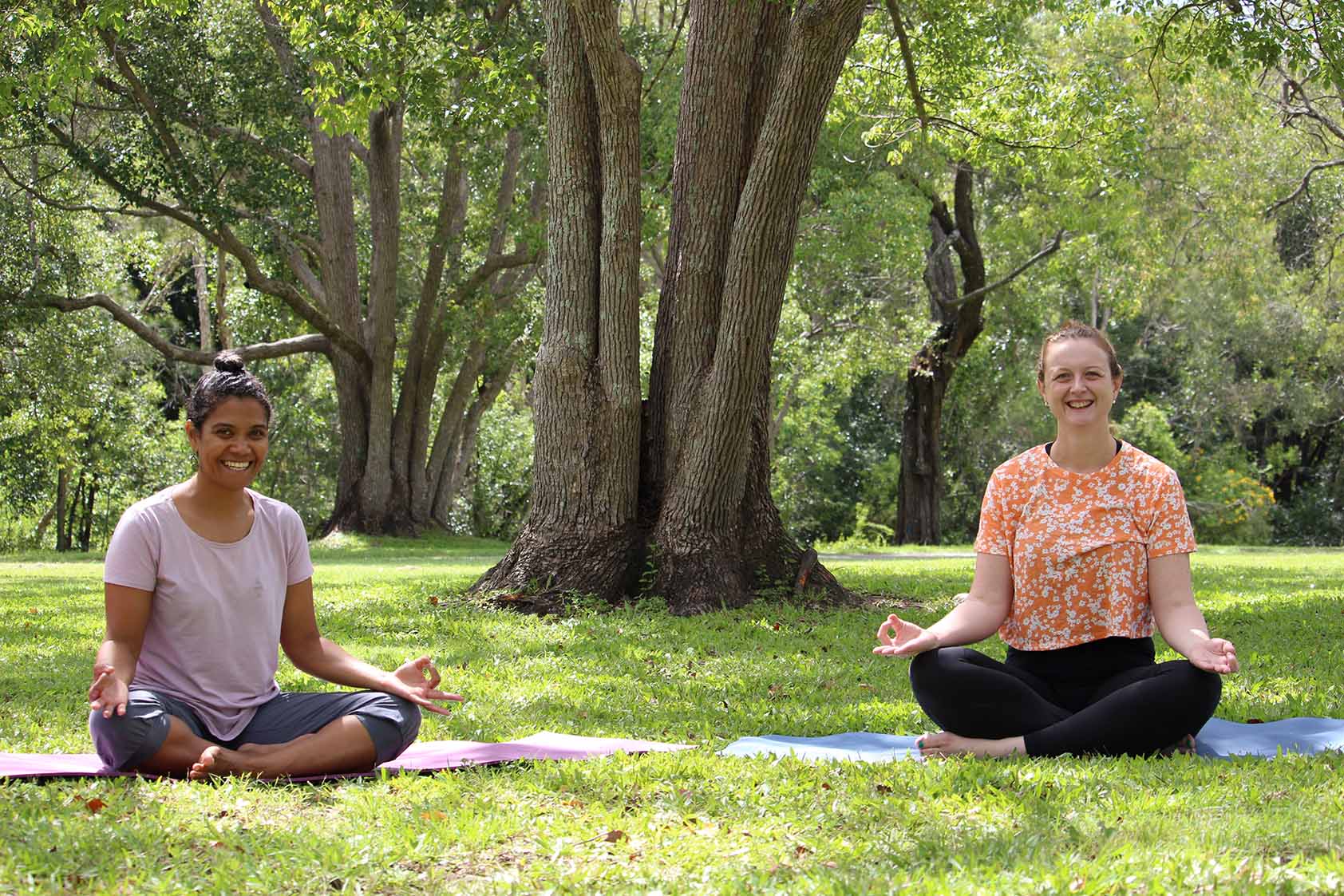
“What do all these words mean? These yoga people are so weird.” is what I first thought when I started yoga! Who knew I would become one of those strange people and teach yoga. Ha ha! Soo….here is a breakdown of some of the common yoga words you may here and what they translate to in English. I do want to caveat this by saying, the words below are a teeny tiny part of yoga, however they did come up a lot in my early classes and you may hear these words as you start to practice and come across different yoga teachers.
Sanskrit: Sanskrit is an ancient language in India and is used in the teachings of yoga.
“Sanskrit is a highly refined language that supposedly comes from nature itself—revealed to meditating sages thousands of years ago. Some say that Shiva, the god of destruction, created the Sanskrit alphabet by beating on his drum fourteen times. Sanskrit grammar is hence defined in the fourteen Mahasvara Sutras.
All major ancient yogic texts, including the Vedas, were written in Sanskrit. It’s actually one of the world’s oldest written languages. These days, it’s rarely used in spoken form outside of prayers and rituals.” The Dedicated Yogi’s Guide to Sanskrit Lingo – Beyogi, 2021.
Yoga: translates to union and the practice is underpinned by this philosophy of uniting the body, breath and mind through the practice of yoga (Yogapedia, 2021).
Namaste: translates to “The divine in me honours the divine in you.” … I have noticed teachers in Australia use the greeting at the end of yoga classes. In Indonesia, people said Namaste regularly to say hello and goodbye to someone.
Merriam Webster indicates: “The Sanskrit phrase namaste is formed from namaḥ, meaning “bow, obeisance, adoration,” and the enclitic pronoun te, meaning “to you.” The noun namaḥ, in turn, is a derivative of the verb namati, which means “(she or he) bends, bows.””
Drishti: refers to focus or gaze
Hatha yoga: breath based practice
Ashtanga yoga: involves a specific set of poses with an order to complete. Kino McGregor is an Ashtanga yoga teacher trained in India and trains people around the world.
Yin yoga: involves holding poses for 1 – 15+ minutes to stretch and release the deeper layers of the muscles/tissues/connective layers/fascia and dropping into deep meditation and rest. There is passive stretching in yin and also active stretching/finding your edge. I teach yin yoga every Wednesday! Join me for class.
Vinyasa: one breath and one movement, you may notice this flow on yoga schedules to describe a flowing yoga class. Expect fluid movements in class, rather than static meditation or hatha based practiced.
Sankalpa: relates to intentions.
Hot yoga: Some studios offer yoga in heated rooms. Handy in colder climates like North America, however is more of a Western yoga attraction. If you practice hot yoga, please be mindful to not over-stretch as muscles/limbs warm up through the external environment/heat and then as asana progresses, internal body heat is generated. So, you can get extra hot!
Asana: This refers to the physical practice of yoga. Asana is only the tip of the iceberg in yoga. :=) Yet, it is what is widely known/seen…
Chakras: refers to energy centres or wheels along the spine.
Savasana: refers to corpse pose or the last shape in a yoga class that involves pause and returning to the natural rhythm of the exhale and inhale. I love savasana! This is also important because savasana integrates your practice/brings everything back to a stable/balanced point so that you don’t leave class at a heightened state.
Do you have more questions about yoga? Great! This article is the tip of a very very big yoga ice berg! So much more to yoga than 1 blog post. Research your local library, Google, find a yoga studio, ask your yoga teacher questions, or drop into my class! Let’s chat yoga. :=)
Photo by Deniz Altindas on Unsplash